Share this article
Help your customers see the core of your life's work.
Let us translate your science and bring your marketing to life!
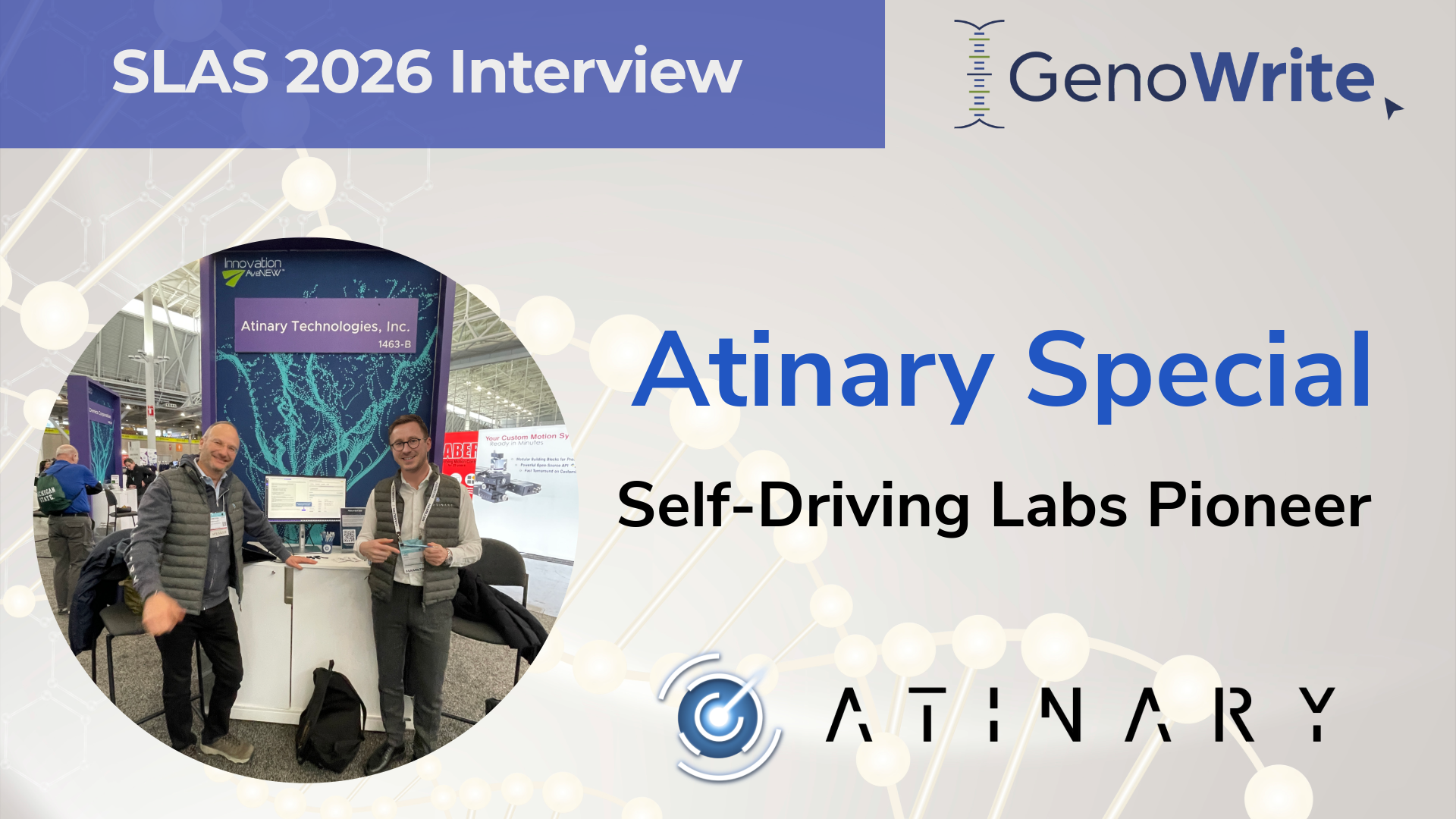
In Part 1 of our interview with Atinary, we introduced the foundations of Self-Driving Labs® (SDLs) and how this technology can help solve some of the bottlenecks in R&D to accelerate molecular discovery and drug development efforts.
In this part, we’ll dive into the software, Agents and AI components that can make a full SDL a reality. Atinary’s flagship technology lies in SDLabs, an Agentic and code-free R&D platform that uses machine learning to accelerate experiment planning and run AI-driven experiments in chemistry, materials, drug development and formulation.
For the scientists and technical leads, you can start learning about Atinary SDLabs by reading the interview below. Dr. Loïc Roch is LR and Dr. Isabelle Okuda is IO.
PN: Algorithms represent a major component of a functioning Self-Driving Lab, and I noticed you have several of them. What’s the difference between each of these algorithms, and how should a company decide which one to use?
LR: We deploy a range of AI algorithms designed for specific challenges. Some tackle multi-objective optimization problems like maximizing yield with sustainability scores, while others integrate expert knowledge into constrained optimization models. We also offer a transfer learning algorithm that learns from your historical data to accelerate future experiments. Supported by autonomous agents that scout literature and diverse datasets, our system is built to maximize efficiency and productivity at a minimum cost.
Regarding the decision of what algorithm to use, one of the core principles at Atinary is that scientists should not need to be AI experts to benefit from AI. Nor should they be required to code to be able to deploy machine learning algorithms, such as approaches like Bayesian Optimization algorithms, to improve their existing workflows. Thus, Atinary SDLabs helps the user to select the best algorithm to use based on their experiment design. This is done with full transparency. SDLabs was built by chemists and for chemists. It removes algorithmic complexity so users can focus on scientific objectives rather than model building and selection.
An algorithm is only as high-performance as the data foundation supporting it. To solve the industry’s ‘reproducibility crisis’ where more than 80% of chemistry experiments cannot be replicated, we don’t just process customers’ data, we also generate it. Our Atinary Self-Driving Lab in Boston’s Seaport is purpose-built to close this gap. That is, we produce high-quality, reproducible, non-biased and ML-ready datasets running autonomous experiments in-house. We offer these datasets that represent nature’s ground truth through a Database-as-a-service business model. With these datasets, our customers can build models on a foundation of reality, not noise.
PN: How does SDLabs accomplish this?
LR: Rather than asking scientists to “pick an algorithm,” SDLabs allows them to define what matters: objectives, priorities, constraints, and available resources. The platform then applies the appropriate optimization strategies, such as Bayesian Optimization, behind the scenes. This is similar to how large language models (LLMs) such as ChatGPT or Anthropic’s Claude are used today. Most users don’t need to understand the underlying architecture to produce meaningful results.
We also deploy transfer learning approaches that leverage data from past experiments to accelerate new experiments. These algorithmic choices are fully integrated within Atinary’s SDLabs Agentic platform, allowing scientists to focus on defining their experiment design while the system applies appropriate optimization strategies automatically.
Beyond optimization, we are also integrating LLM-based capabilities and agentic workflows to support literature mining, data extraction, experimental design and explainability. This allows scientists to interact with the platform and carry out “conversations” to provide expert context and feed text through one user-friendly interface. But navigating complex chemical or biological spaces requires more than text-based AI. This is where Bayesian optimization and active learning AI strategies excel – efficiently screening thousands to billions of possible combinations and deciding which experiment to run next based on real experimental data, finding the global optima with a fraction of the experiments and cost.
PN: The science lab is often filled with equipment that performs distinct functions that seem far away from each other. How does SDLabs bridge these seemingly disparate parts together?
IO: SDLabs is workflow-agnostic; it connects to whatever physical configuration a lab already has. The ‘connector’ between the different lab equipment is not a mechanical bridge; it is the algorithm and data model that allow the software to connect separate equipment as components of one integrated discovery engine. To ensure a seamless flow of information, we integrate directly with Electronic Lab Notebooks (ELNs), synchronizing disparate lab equipment and historical data into a unified digital environment. Scaling towards full Self-Driving Labs® therefore becomes a matter of expanding this digital orchestration layer, bridging the gap between the ELN and the bench, to integrate more lab equipment into a single, high-performance R&D pipeline.
PN: Open-source solutions for building SDLs require lines of Python code that scientists may not be familiar with. How does SDLabs’s interface make automating the hardware easier?
LR: The reality is that every line of custom Python code a scientist must write is a distraction from the science itself. Open-source tools are powerful, but they turn researchers into part-time developers who must then manage and maintain their own deployment, security, and infrastructure — one of the most expensive and labor-intensive parts of the software lifecycle.
SDLabs eliminates this coding tax by providing a code-free, agentic orchestration layer. Instead of writing scripts to toggle valves or log data, scientists use an intuitive interface to define the Design-Make-Test-Analyze and Learn (DMTA-L) cycle. Behind the scenes, our platform handles complex digital plumbing, including integrating diverse hardware, syncing with ELNs, and ensuring the data is machine-learning-ready. This doesn’t just make automation easier; it makes it scalable. We take the burden of keeping up with the pace of innovation off the scientist’s shoulders, allowing them to focus on scientific discovery while we provide the industrial-grade foundation that turns a lab into a true autonomous engine.
PN: How does SDLabs recover from errors during an automated task? Let’s say that a robotic arm drops a plate or a drug formulation ingredient is spilled. How does SDLabs command the arm to respond?
IO: In a closed-loop system, error handling is critical. Because we capture comprehensive metadata at every step, the system must identify anomalies in real time, which, in turn triggers automated recovery routines or alert a scientist to intervene, ensuring data integrity and safety remain high and the physical lab space stays protected.
PN: My understanding right now is that self-driving labs require specific equipment compatible with the software that you’re developing. Has that changed since, and will your self-driving lab eventually become compatible with any equipment?
LR: The vision of Self-Driving Labs® has always been Atinary’s Agentic platform is designed to function with maximum flexibility: it can be used as a standalone tool in the users’ existing workflows, with or without robots, to support R&D teams with AI-driven design of experiments, and it can seamlessly connect with robots to enable full Self-Driving Labs® mode.
The fact that we work across diverse sectors, including pharma, biotech, chemistry, food and fragrance, and materials science, is proof that our technology is truly a general purpose technology. The platform is designed as on Open Platform to interface with any laboratory equipment that offers an API (Application Programming Interface). By leveraging these APIs, SDLabs acts as the central “brain” that sends digital commands to diverse hardware to orchestrate the DMTA-L cycles across diverse lab environments: triggering experiments, collecting results, and feeding data back into the AI in real time. The same principle applies to integration with ELNs, LIMS, and other digital lab systems.
This same principle applies to integration with ELNs, LIMS, and other digital lab systems, allowing us to fit perfectly into the existing IT landscape. This flexibility is essential. Self-Driving Labs are not about replacing existing infrastructure; they are about augmenting it and turning today’s labs into autonomous discovery engines without forcing scientists to rebuild everything from scratch.
As I progressed through the interview, I realized that building an SDL requires an intricate understanding of robotics, machine learning models, and ergonomics. To take a closer look at this process, I also spoke with Isabelle Okuda about the process of building the SDL in Boston Harbor and how they established collaborations with leading robotics manufacturers such as ABB Robotics, Agilent, Bruker, Chemspeed, and Mettler Toledo.
When I look back at our journey since I joined the company in March 2025, it is remarkable to see how quickly we transitioned from foundational robotics concepts to a fully operational, closed-loop Self-Driving Labs® in Boston in about a year. It was both exhilarating and daunting. My role was to architect an autonomous experimentation platform capable of running end-to-end discovery cycles. This required a true “pioneer” mindset, working closely with Atinary’s outstanding team to leverage their expertise and experience in AI and the vision of Self-Driving Labs that Atinary’s founders first proposed back in 2017. We weren’t just setting up a lab; we were executing on the original vision and defining a new standard for physical AI in the wet lab environment. This involved designing a system architecture, defining workflows, and harmonizing robotics, analytical instruments, built-in reactors, and a data-first foundation from the ground up.
The early months were a masterclass in cross-functional leadership, aligning our teams across Switzerland, Michigan, and California. We worked in close lockstep with Atinary’s team of 24 full-time employees, along with more than 60 external collaborators, to design the two robotic platforms in Atinary’s lab and ensure that these platforms were capable of executing various workflows and producing ML-ready datasets. We completed the design of the platforms during the summer last year, and the engineers began building them shortly after. We also hired a chemist to support the physical setup of the lab. The Atinary lab is a beautiful space, with floor-to-ceiling windows overlooking the sea and Boston airport.
The first of the two robotic platforms is a customized autonomous system that we designed together with ABB Robotics, Agilent, and Mettler Toledo. The second is a Chemspeed iSynth integrated with a Bruker 80 MHz in-line NMR. Both are autonomous and self-driving, orchestrated and driven by Atinary’s agentic platform, SDLabs. These robotic platforms run experiments continuously in an iterative loop to optimize scientific objectives, recording all data, summaries, and metadata to build high-quality datasets used to train algorithms that suggest the best next experiments to run.
The launch of the Atinary Lab during SLAS Boston 2026 was a defining moment for the team and brought external visibility. It was very special to host representatives from major pharma companies and our collaborators at the lab and witness our systems running as a cohesive whole, where robotics, data, metadata, optimization, and safety all function together. This was the culmination of an intense technical and personal commitment.
Today, we are moving beyond the “build” phase into scaling and extending the platform. We are refining complex chemistry workflows, expanding our capabilities, mentoring the next generation of engineers and scientists, and ensuring the lab continues to operate at a high level to produce scientific breakthroughs. This journey has demonstrated what is possible when people, architecture, automation, robotics, and AI come together with clarity of purpose: to fundamentally redefine the pace of human discovery.
If you want to learn more about the SDLs they’re building in Boston, subscribe to the GenoWrite newsletter by clicking on the button below on the left. You can also check out the Atinary website by clicking on the button to the right below.
Thank you to SLAS 2026 as well for facilitating the interview through our media partnership.
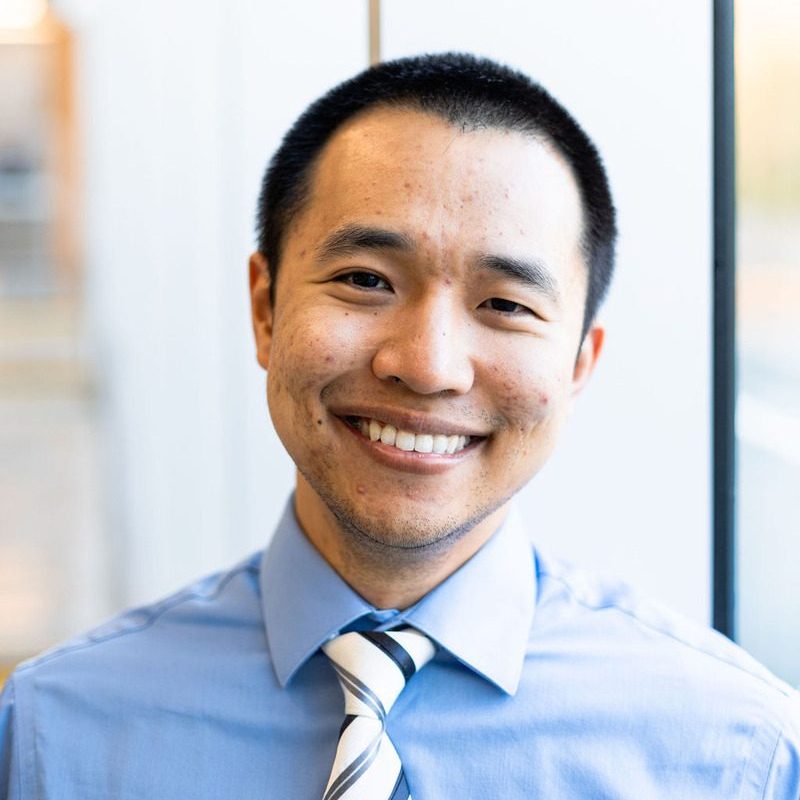
Paul Naphtali is a seasoned online marketing consultant. He brings to the table three years of online marketing and copywriting experience within the life sciences industry. His MSc and PhD experience also provides him with the acumen to understand complex literature and translate it to any audience. This way, he can fulfill his passion for sharing the beauty of biomedical research and inspiring action from his readers.
Help your customers see the core of your life's work.
Let us translate your science and bring your marketing to life!