Precision medicine has taken centre stage in recent years. The deep desire to detect debilitating diseases such as cancer and Alzheimer’s disease has placed it on top of people’s minds. This is especially the case when symptoms that can indicate several distinct disorders. Any potential for misdiagnosis can lead patients through a diagnostic odyssey that prolongs their search for adequate care and treatment.
The key to correctly diagnosing these diseases before they become too severe to treat. That’s where extracellular vesicles (EVs) come in.
EVs used to be seen as cellular leftovers as they were processed in the lab. But now, we know that they carry biological messages and materials that tell us a lot about a cell’s physiological state. If we can isolate EVs, we can examine the proteins inside them and see if they can tell us more about a person’s health status.
For example, EVs shuttle a wide array of brain-derived markers of neurocognitive disorders into the blood. That creates the potential to monitor neurocognitive disorders without needing to collect cerebrospinal fluid (CSF). And CSF is not easy to collect.
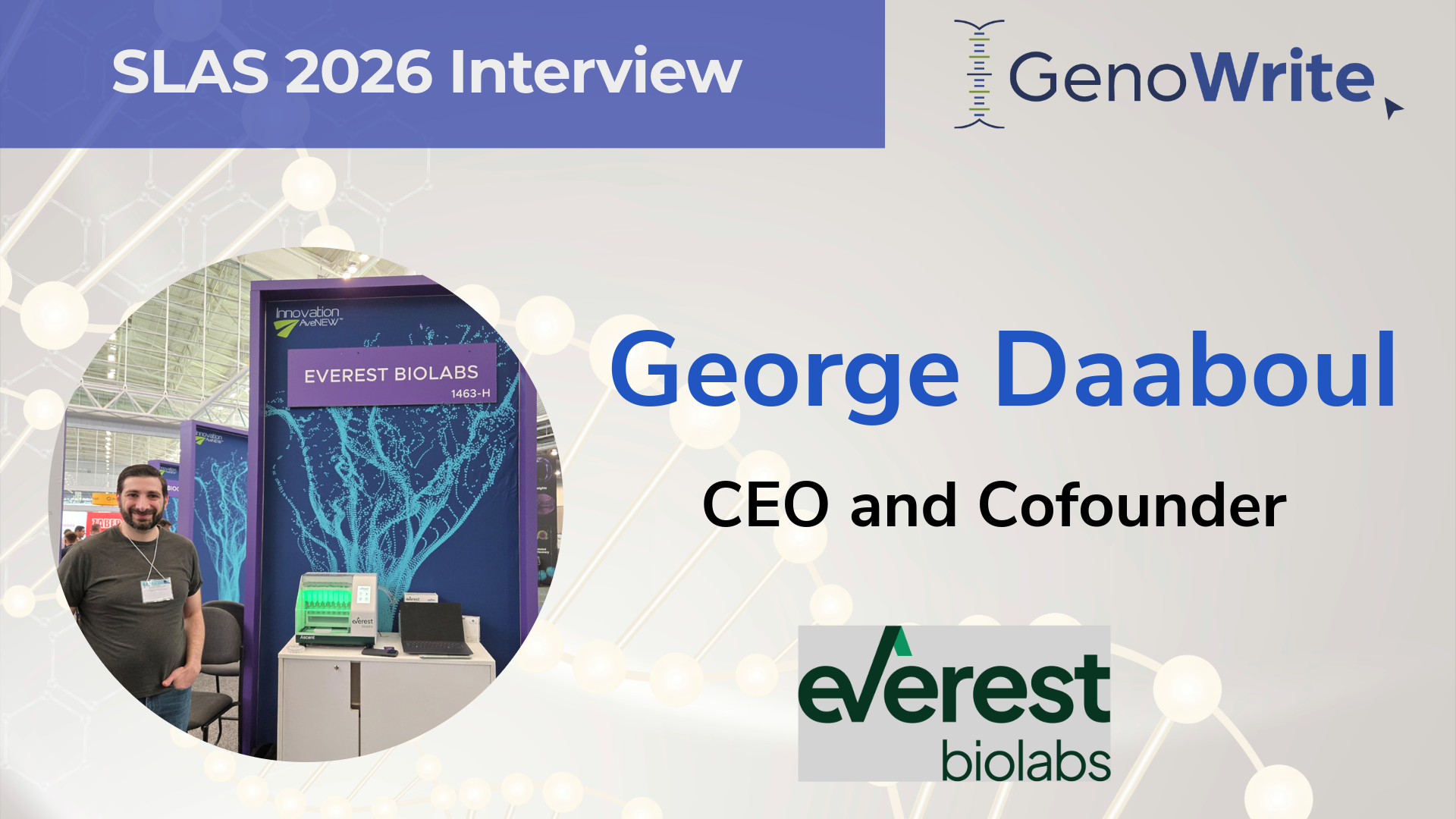
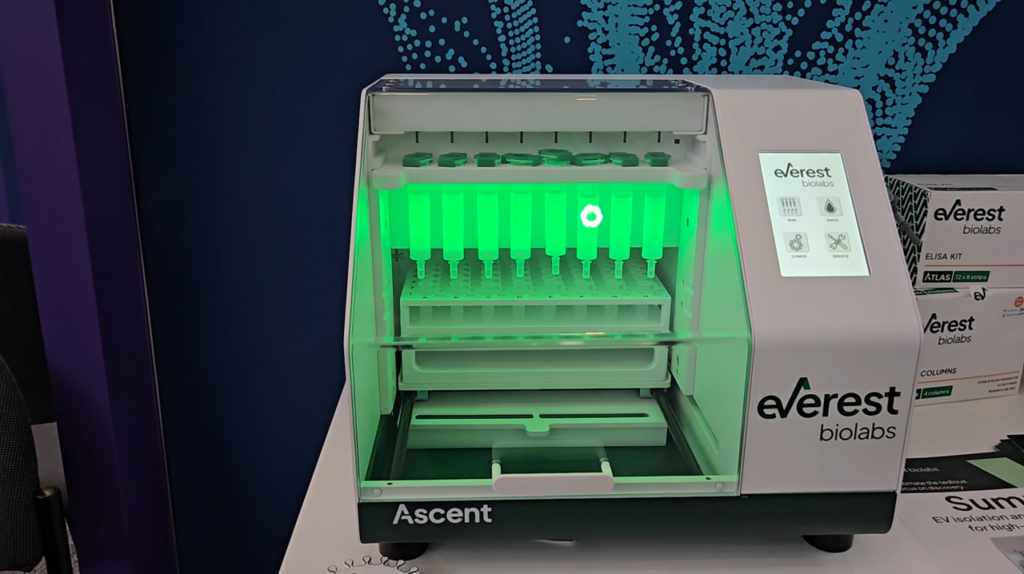
To learn more about the advances being made in this field, I sat down with George Daaboul, CEO and Co-founder of Everest Biolabs. He and his team have developed the Ascent and Summit, two instruments that run up to 8 and 48 samples in parallel.
In the interview, we’ll cover why isolating EVs are useful for diagnosing diseases, what the Ascent and Summit instruments can do, and how Everest Biolabs plans to make EV isolation a key component of diagnosing disease.
PN: The past couple of years have seen a surge of effort to develop disease biomarkers, particularly when it comes to liquid biopsies. How do extracellular vesicles (EVs) provide a path towards high-resolution and real-time monitoring of a person’s health?
MA: EVs are released by every cell in the body and circulate in biofluids like blood, urine, and saliva. These vesicles carry molecular messages from their parent cells, providing a window into otherwise inaccessible tissues through a simple blood draw. Although EVs were first discovered in the 1970s, their biological significance wasn’t appreciated until the early 2000s. At the time, researchers thought that EVs were technical artefacts from cell fixation, death, or degeneration.
PN: It’s amazing what you can learn when you take a closer look at what appears to be technical artefacts.
MA: I think that goes to highlight just how underappreciated EVs have been for a while. Thankfully, research into EVs has grown exponentially as scientists recognized their potential across virtually all disease areas. EVs carry surface proteins that can indicate their cell of origin, along with cargo including proteins and nucleic acids such as RNA—making them rich sources of biomarkers for real-time disease monitoring. In short, EVs turn a routine blood draw into a real-time molecular snapshot of the entire body.
PN: At Everest Biolabs, you’re developing automated workflows for EV extraction. How would scientists typically isolate and study EVs, and what about it inspired you to start Everest Biolabs?
MA: The traditional gold standard for EV isolation is ultracentrifugation — spinning samples at 100,000 × g. Although it’s 100 times the speed needed to isolate cells, researchers can isolate different kinds of exosomes from other biomaterails. Where ultracentrifugation is truly lacking is in three aspects:
More recently, gravity-driven size exclusion chromatography (SEC) has gained popularity because it’s instrument-free, gentle on the vesicles keeping them intact, and delivers high recovery. However, manual SEC remains low-throughput and prone to operator variability.
PN: The struggles of existing isolation methods to ensure reproducibility and scalability are clear from your responses. How, then, does automating the isolation process transform EVs from discovery into a reliable tool for clinical diagnostics?
MA: As EV biomarker discoveries progress toward clinical validation, study sizes grow significantly, and studies must be conducted across multiple sites. Automation addresses both scaling challenges and site-to-site reproducibility by reducing dependence on replicating the skill and technique of the scientists who performed the initial discovery work. Beyond reproducibility, automating EV workflows also frees scientists from days of monotonous isolation protocols that are susceptible to human error and failed experiments leading to unnecessary repeats, or batch-to-batch variability.
PN: And that’s where the Ascent and Summit machines enter the EV discussion.
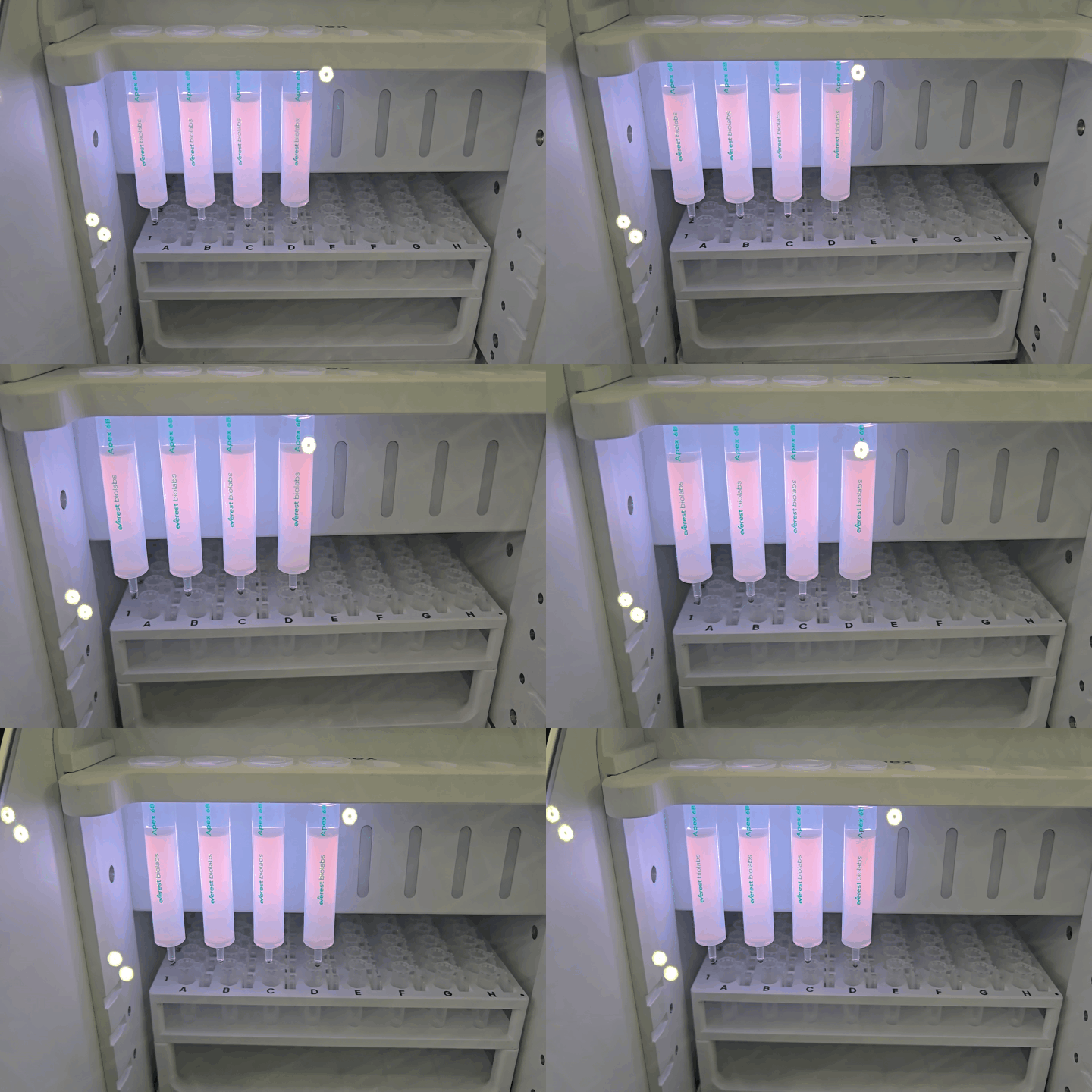
MA: Yes, that’s right. Our Ascent and Summit automated isolation platforms give researchers time back to focus on the science itself. Importantly, we’ve innovated beyond traditional single-mode SEC columns. Our Apex MM columns combine size exclusion with multi-mode resins to separate EVs from similarly sized lipoprotein particles like LDL, a persistent challenge when isolating EVs from plasma and serum (Figure 1).
PN: How do the Ascent and Summit platforms integrate into existing automated laboratory workflows, and what flexibility do users have to adapt them to different sample preparation pipelines?
GA: The Ascent and Summit platforms (Figure 2) are designed to integrate seamlessly into existing laboratory workflows without requiring labs to redesign their processes. Both platforms automate size exclusion-based EV isolation using standardized labware and familiar consumables, allowing them to fit naturally alongside downstream analytical steps.
The Ascent and Summit machines facilitate EV isolation at any level of throughput:
Both platforms are also adaptable to different biofluids, column chemistries, and fractionation schemes. Customers using our Summit instrument, a plate-based, fully automated liquid handler capable of processing 48 samples simultaneously, have compressed what used to be several full days of hands-on work into a half-day process requiring only a few minutes of hands-on-time. A single Summit machine also eliminates several benches of manual SEC column stands. This frees up precious lab space, improving throughput and reproducibility.
PN: Congratulations on being selected as an Innovation AveNEW company! How will this milestone help you achieve greater adoption of EVs in clinical applications?
MA: We’re honoured to have Everest Biolabs selected as a SLAS2026 Innovation AveNEW company. The SLAS platform allows us to showcase our solutions we’ve developed to address critical bottlenecks in scaling EV biomarker studies—from our 8-sample Ascent instrument for mid-throughput needs to our 48-sample Summit for high-throughput clinical cohorts. Equally important, it’s an opportunity to connect with experts in laboratory automation and learn how we can integrate into the broader ecosystem of the automated lab of the future. We’re excited to engage with the SLAS community and demonstrate how automation is making EV-based diagnostics a clinical reality.

Paul Naphtali is a seasoned online marketing consultant. He brings to the table three years of online marketing and copywriting experience within the life sciences industry. His MSc and PhD experience also provides him with the acumen to understand complex literature and translate it to any audience. This way, he can fulfill his passion for sharing the beauty of biomedical research and inspiring action from his readers.
Help your customers see the core of your life's work.
Let us translate your science and bring your marketing to life!